If you look for a "fast first aid course near me", you will find lots of deals: express first aid in half a day, fast CPR refresher course in 2 hours, online concept adhered to by a fast functional session. For hectic employees and employers under stress to meet compliance deadlines, these guarantees are eye-catching. The huge inquiry is whether a fast first aid certificate actually prepares a person to act when a life is on the line.
I have actually invested years providing first aid and CPR training to work environments, childcare solutions, and community teams. I have actually seen individuals stroll right into a fast first aid training session purely to tick a box, and leave shocked at how much they now notice around them: trip dangers, asthma puffers without spacers, elderly neighbors living alone. I have actually additionally seen the opposite, where a rushed course left students incapable to remember basic CPR steps simply weeks later.
Time is an aspect, yet it is not the only factor. The style and distribution of the course issue far more than the variety of hours on the certificate.
What a First Aid Course Is In Fact Attempting To Achieve
Before evaluating fast first aid courses, it assists to be clear concerning what "efficient" indicates in this context. A great first aid and CPR course is not just a lecture or a rule to please regulators. It ought to attain 3 things.
First, expertise: acknowledgment of typical emergencies such as cardiac arrest, choking, stroke, anaphylaxis, serious blood loss, burns, seizures, asthma attacks, and head injuries. Students need to understand top priorities and understand when to call emergency situation services.
Second, hands‑on skill: the capability to begin CPR promptly and with reasonable high quality, use an AED without hesitation, control extreme bleeding, location a person in the recovery placement, and assistance breathing problems while assistance gets on the method. For child care teachers, express childcare first aid training need to also cover paediatric CPR, choking in infants and youngsters, and allergic reaction and bronchial asthma administration plans.
Third, confidence under stress and anxiety: the calmness to act rather than cold, and the judgment to adjust book actions to unpleasant, real‑world scenes. That confidence does not appear from theory alone; it comes from realistic method and positive feedback throughout training.
If a fast first aid course provides all three outcomes, after that the much shorter period is not an issue. If it only covers concept at rate and hurries the practical elements, after that the certificate is little more than paper.
How "Fast" Are Fast First Aid Courses Really?
The expression "fast first aid" covers a vast array of layouts. Some instances I come across on a regular basis:
A compressed express first aid course for individuals restoring their certificate. A lot of the web content is modification, and the learners have seen it before.

Blended delivery where first aid concept is completed online, adhered to by a brief face‑to‑face session concentrated on CPR training, AED use, and assessment.
Fast CPR courses that just cover CPR and defibrillation, normally for employees that currently hold a more comprehensive first aid certificate yet have to revitalize their CPR annually.
Express child care first aid courses customized to early youth regulations, with pre‑course analysis, scenario‑based workshops, and targeted assessments.
The small period listed on a course rundown must not be read as the only time you will spend discovering. In a contemporary first aid and CPR course, it is common for half the finding out to happen prior to you even walk into the classroom, through on the internet modules, analysis, or office drills. A 3 hour face‑to‑face session coupled with 3 to 4 hours of on the internet job can be much more efficient than a loosely structured 2 day course where people sit in an area and absorb little.
What matters is complete knowing time, just how that time is used, and how well it matches the learner's background.
Short Courses vs Multi‑day Training: What Truly Changes?
Multi day first aid courses absolutely have advantages. There is more time for rep, even more chances for questions, and a slower rate that fits people who are anxious or not familiar with the web content. I have seen very worried individuals, especially older grownups or individuals that did not finish school, bloom across two days as the material is duplicated and practiced.
On the other hand, I have seen 2 day courses that waste time on long videos, off‑topic tales, or disorganized discussions. People are far from work and family for an extended period, yet still leave unsure of the CPR compression ratio or the indicators of stroke.
Fast first aid courses typically concentrate on performance. The content is tighter, the trainer keeps a brisk pace, and there is little room for drift. When this is succeeded, it appreciates adult learners: clear purposes, appropriate examples, succinct descriptions, immediate practice. When done badly, it feels like stuffing for an examination, with individuals copying answers right into a workbook they hardly understand.
From an abilities perspective, CPR is the clearest test situation. Research study and experience both suggest that CPR quality starts to decline just a few months after training, despite whether somebody did a long or brief course. That is why many workplaces timetable CPR refresher courses every twelve month. The size of the initial course is lesser than just how usually abilities are revitalized and practiced.
When Fast First Aid Training Functions Well
Fast first aid and fast CPR courses can be very effective in specific circumstances. When I see great end results from a short format, some typical aspects are present.
Learners are restoring, not picking up from cpr blended course scratch. If somebody has actually already completed a complete first aid and CPR course within the previous few years, an express first aid refresher feels acquainted. They bear in mind the broad actions. The fast structure runs their memory and sharpens strategy as opposed to overwhelming them.
Pre course prep work is genuine, not token. In solid mixed courses, learners full interactive online components with inquiries, videos, and circumstances before the classroom day. Fitness instructors can then invest face‑to‑face time on concerns, presentations, and reasonable simulations.
Group dimension is workable. Efficient fast first aid training counts on great deals of short, concentrated practice turnings. When there are way too many individuals per manikin, or a solitary trainer is juggling 20 participants, weaker students can hide in the crowd and never receive individual feedback.
Trainers are experienced and sensible. A fast course climbs or falls on the trainer's capacity to focus attention on what issues, adjust explanations to the group, and cut through jargon. In my very own CPR courses, I usually remove the message down to one straightforward policy for lay -responders: "Set on the upper body, marginal disturbances, obtain the AED on as soon as you can." Additional details are included just when the essentials are solid.
Workplaces assistance practice. In some organisations, first aiders make use of manikins briefly toolbox sessions, run mock drills, and evaluation real events. A brief initial course works penalty since it sits inside a living safety culture as opposed to being the only direct exposure to first aid and CPR.
In these contexts, fast first aid courses are not a shortcut, they are a regimented method of providing the very same knowing results in a tighter, adult‑friendly package.
When Fast First Aid Courses Loss Short
I have also walked into business that acquired the most inexpensive, fastest first aid certification available, and the voids show right away. In one situation, a worker fell down with a seizure and none of the apparently trained initial aiders recognized to protect the head, time the seizure, or roll the individual when it ended. Their certificates were up to day, but their competence was not.
Compressed courses struggle in several situations.
Complete beginners with low health proficiency. If someone has actually never ever seen CPR carried out, is unfamiliar with fundamental composition, or feels extremely uncomfortable around blood and injury, they usually need more than a fast session to soak up and incorporate first aid concepts. Expecting them to end up being confident responders in a solitary express first aid course sets them up to fail.
People https://beckettgfjf347.lowescouponn.com/fast-certification-in-first-aid-and-cpr-misconceptions-vs-truths who are anxious or easily bewildered. Some students need time, rep, and a risk-free area to ask what feel like "silly" concerns. In a fast first aid and CPR training course, they may drop quiet, let others answer, and leave without addressing their fears.
Complex office threats. High threat sectors such as stockrooms, producing plants, remote worksites, or atmospheres with chemical exposures typically need scenario‑based practice that surpasses common first aid. Attempting to press that right into a short session normally implies either the common material, the workplace‑specific drills, or both are compromised.
Childcare and institution environments with special health and wellness demands. Express childcare first aid courses can work well for experienced teachers, yet brand-new team getting in very early childhood years or impairment Click for more info support roles take advantage of additional exercise with bronchial asthma spacers, anaphylaxis plans, seizure management, and the truths of emergency situations entailing children. That depth is tough to get to if every section is rushed.
Box ticking society. Where administration's single purpose is "fast certification" at minimal price, there is pressure to do the bare minimum. People get here late, leave early, or resolve the on-line component while sidetracked. The organisation can reveal auditors an impressive line of first aid certificates, but in an actual emergency situation, efficiency tells a different story.
Fast does not always imply inefficient, yet the risk of shallow understanding is higher when no person is looking beyond the timetable.
What To Seek In a Fast First Aid or CPR Course
If you are thinking about a fast first aid course or express CPR course, you can rapidly separate severe suppliers from surface ones by inspecting a couple of key aspects.
Clear knowing results instead of obscure promises. Credible companies name the particular systems, such as typical workplace first aid or an extensive first aid and CPR course, and detail both expertise and ability requirements.
Blended understanding with purposeful on the internet web content. If you are expected to finish pre‑course concept, it needs to include questions, situations, and brief analyses, not just a PDF to skim. Great on the internet modules help you arrive at the express first aid training session ready to practice.
Real useful evaluation, not just presence. A fast CPR course should still require you to show continuous compressions and ventilations for a sensible period, utilize an AED fitness instructor, and handle fundamental first aid circumstances. If a provider tips that every person passes despite performance, deal with that as a warning sign.
Appropriate class dimensions and devices. Inquire about the number of participants per manikin, especially in CPR training. A ratio that permits you to spend just a few minutes on the manikin is not enough.
Trainer experience and assistance. Experienced instructors will gladly address in-depth questions about their first aid and CPR training classes. If the person on the phone can not clarify just how the course runs or brushes off worry about "it is done in the video", look elsewhere.
This short checklist uses whether you are booking a one‑off express first aid course, arranging fast first aid training for a whole team, or searching for "fast first aid course near me" as an individual.
Can Somebody Really Find out CPR in a Number Of Hours?
CPR is typically mentioned as the ability that allegedly can not be educated properly in a brief timeframe. My sight is extra nuanced.
The fundamental electric motor series of CPR compressions, particularly chest placement and deepness, can be instructed within minutes. Individuals choose it up quickly when they see and feel it. The obstacles are not generally technical however mental: worry of breaking ribs, stress over doing it "incorrect", discomfort with mouth‑to‑mouth, or stress and anxiety concerning legal consequences.
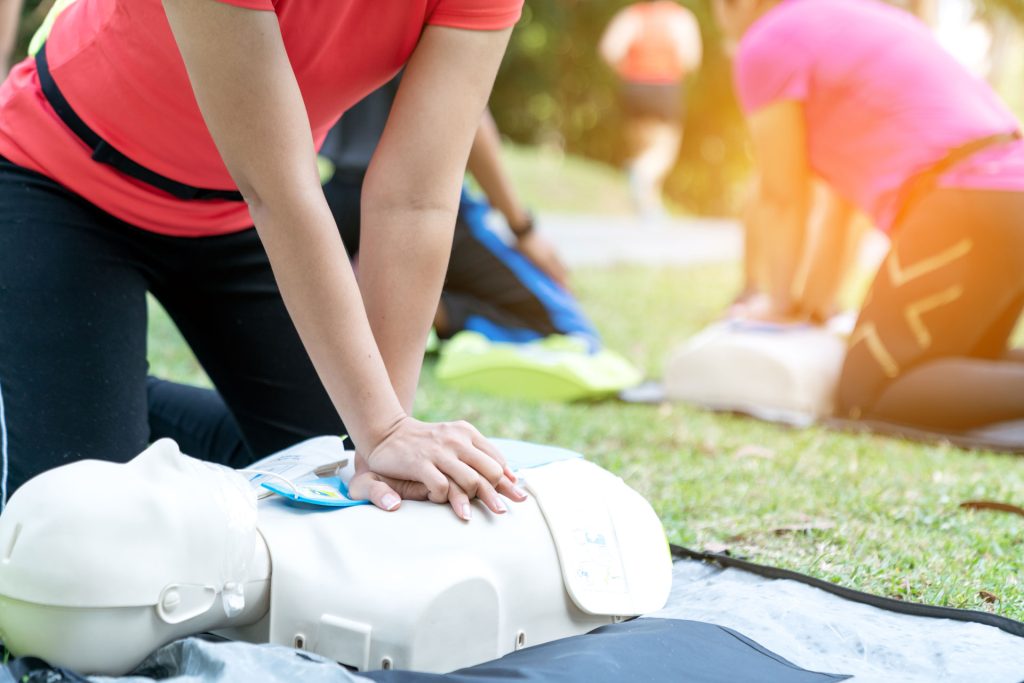
In a focused fast CPR course, a lot of the moment is spent working through those obstacles. Students compress on a manikin till they locate the rhythm and depth. They practice with face guards or with compression‑only CPR, review regional standards, and talk with real cases. By the end, nearly everybody in the area can provide practical high quality CPR.
The limitation lies in retention. Any type of CPR training, whether two hours or 8, discolors if it is not freshened. That is why numerous guidelines suggest refresher CPR training every one year, even if official first aid certifications remain valid longer. Some markets are transferring to much shorter however much more constant CPR sessions, for example a quarterly fast CPR correspondence course of 30 to 45 mins installed into safety meetings.
So yes, a person can discover practical CPR in a number of hours, as long as that understanding is enhanced routinely. The trouble is not the fast layout, it is the one‑off nature of much first aid and CPR training.
Special Case: Express Child Care First Aid Courses
Childcare and school environments include psychological weight and specific threats. When something goes wrong with a youngster, also experienced grownups can worry. Regulations in numerous regions need early childhood educators to maintain current first aid and CPR certificates, usually with added modules in asthma and anaphylaxis.
Express child care first aid courses have expanded in reaction, appealing coverage of paediatric first aid in a single day, often with pre‑course e‑learning. I have actually trained lots of teachers with this format. When the course is designed well, it is highly functional: choking drills with baby manikins, role‑plays of epi‑pen administration, mock play area incidents, and conversations of actual cases.
The express layout matches instructors who already manage minor injuries daily and just need organized training, legal clearness, and accredited abilities. It is less perfect for new personnel that have actually never ever held a less competent baby or seen a significant allergic reaction. For them, added mentorship in the workplace is critical, alongside the official express child care first aid course.
A solid childcare‑focused program covers not simply emergency situations, however prevention. Simple actions such as overseeing consuming, keeping nuts firmly, and preserving bronchial asthma action prepares probably protect against more events than any kind of dramatic resuscitation. The most effective express childcare first aid training includes these day-to-day techniques instead of focusing entirely on worst‑case scenarios.
Fast Courses, Genuine Emergency Situations: What Actually Happens
When you run first aid courses for long enough, you listen to back from individuals who had to utilize their abilities. These stories are my actual test of whether fast first aid courses work.
One white-collar worker that finished a combined first aid and CPR course described walking into a health club changing area to discover a male broke down and not breathing typically. He kept in mind the basic chain: check action, phone call for assistance, start compressions, get the AED. The real series was messy, but he maintained going up until paramedics arrived. His training session had lasted a single full morning, combined with online concept the week before.
Another student went to a fast CPR training course on a Friday and utilized it on Monday, when a kid choked at a household barbeque. Her hands shook, yet she remembered the steps for choking in kids and removed the blockage. That course was a compressed evening session targeted at parents and grandparents. Very short in period, really concentrated in material, utterly essential in its impact.
On the opposite, I recall an employee in a big warehouse with a thick folder of certifications, including a multi‑day first aid course from two years earlier. When his colleague was crushed by a pallet, he froze. No person was assigned as a clear initial aider. No normal drills happened. The size of his initial training was pointless due to the fact that the skills had never been secured in practice.
These cases strengthen a hard reality: a certificate, whether from fast first aid courses or extensive programs, is only the beginning point. The practices of scanning for dangers, thinking about what can fail, and mentally practicing your response are built over time.
How To Obtain The very best From Any Fast First Aid Course
If you decide that a fast first aid or express CPR course fits your routine, you can boost its efficiency significantly with some simple steps.
Arrive with some foundations. Total any on-line modules thoroughly. View a credible CPR video clip from acknowledged organisations. Skim through your workplace emergency situation strategy. In this manner, the face‑to‑face session comes to be reinforcement and modification rather than an initial exposure.
Ask for method, not simply description. When you feel uncertain concerning a skill, inform the fitness instructor you would like to attempt it once again. Excellent instructors welcome this. I would certainly a lot instead remain a few mins much longer so somebody can duplicate an asthma spacer strategy than have them walk out unsure.
Connect the web content to your actual setting. If you function around machinery, ask particularly about crush injuries and unchecked bleeding. If you support older loved ones, talk with stroke recognition and falls. Customizing examples to your life makes details stick.
Plan for refresher courses from the start. Schedule a suggestion well prior to your certificate expires. Talk to your supervisor about routine, brief drills. Use fast CPR correspondence course and toolbox talks to maintain the memory warm, not to pick up from scratch again.
Share what you discovered. Showing others, also informally in your home or at work, is one of the toughest methods to seal understanding. When you clarify the essentials of first aid and CPR to somebody else, voids in your very own understanding become evident, and you can resolve them while the web content is fresh.
In my experience, the people who adhere to these routines are the ones that progression in emergencies, despite whether their initial course was three hours or 3 days.
A Well balanced View Of Fast First Aid Certification
Fast first aid courses, express first aid training sessions, and portable CPR courses are not inherently inferior. They are tools. Made use of well, they let hectic adults gain vital abilities without giving up entire workweeks. Made use of carelessly, they produce an incorrect feeling of security.
When finding between a fast first aid course and a much longer option, the key questions are easy. Just how much prior direct exposure do the students have? How strong is the provider's emphasis on useful abilities and analysis? Will certainly the organisation assistance refreshers and drills later, or is this a one‑off event to please compliance?
Certification is needed. Proficiency is optional, unless you insist on it. If you treat your first aid and CPR course as more than documents, also an express format can come to be a transforming point, the minute you determined that if somebody collapses near you, you will certainly recognize what to do and have the confidence to act.
